
Injuries and Painful Conditions
Address the causes, not just the symptoms of pain.
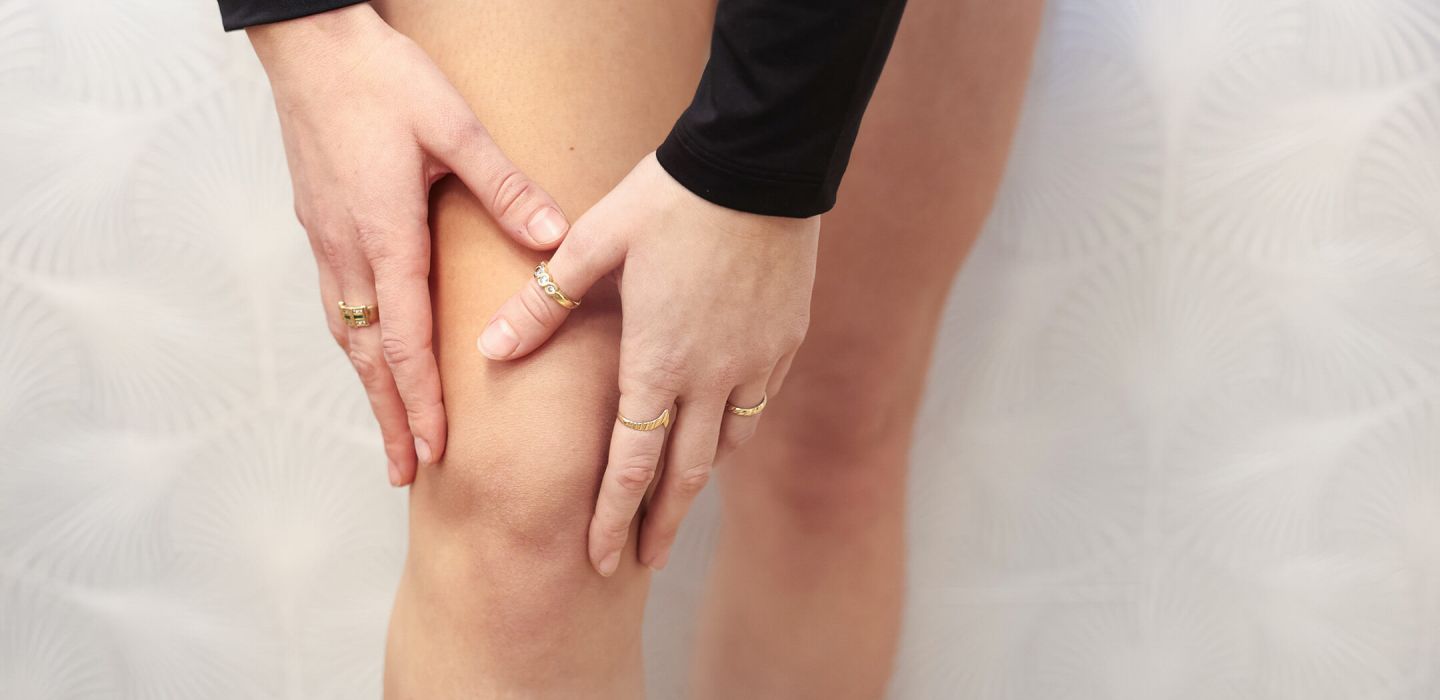
What distinguishes an injury from a painful condition?
Mechanical damage vs. nervous system
An injury can be defined as tissue damage, meaning the pain arises from some form of physical harm—such as a ligament sprain, muscle rupture, bone fracture, or joint inflammation. The healing process for such tissue damage usually takes between 3 and 6 months. After this period, any pain felt at the site of the former injury is no longer linked to tissue damage.
Pain or painful conditions lasting longer than 3 to 6 months are the result of the nervous system attempting to protect us. The nervous system sends pain signals to a specific area to prevent overuse and potential re-injury. This protective mechanism can have various causes, the most common being previous trauma, surgical procedures, impaired organ function due to infections or inflammation, poor stress management, and lack of movement.
Most common pain issues we address
Pain doesn’t discriminate – whether athlete, recreational exerciser, or inactive, everyone experiences it.

Joint Pain and Traumatic Injuries of Tendons, Ligaments, and Muscles
Joint pain can generally be divided into two categories: pain as a protective mechanism and pain resulting from trauma and/or structural damage (to tendons, ligaments, and other passive joint structures, or muscles).
In both cases, normal joint function and movement are impaired. That’s why timely and effective treatment is essential to prevent injuries and painful conditions in other areas of the body and to ensure you can function normally in both personal and professional life.
Overuse
Syndromes
The most common non-traumatic pain syndromes occur in both athletes (recreational and professional) and the general population, significantly affecting daily life.
The causes of overuse syndromes include impaired optimal reflexive biomechanics of the muscles in the painful area and a lack of muscle endurance and strength in the affected region. Addressing overuse syndromes ensures uninterrupted enjoyment of sports and other activities.
Pre- and Postoperative Rehabilitation
Surgery is sometimes necessary to address structural problems in the body. At our center, we offer a specialized preoperative rehabilitation program to prepare patients for surgery and ensure a faster recovery afterward, as well as a personalized postoperative rehabilitation plan.
The most common diagnoses we encounter every day

Shoulder
- Frozen shoulder (adhesive capsulitis)
- Bursitis
- Supraspinatus tendinitis
- Rotator cuff tear
Elbow
- Tennis elbow (lateral epicondylitis)
- Golfer’s elbow (medial epicondylitis)
- Student’s elbow (olecranon bursitis)
Hip
- Hip impingement (Femoroacetabular Impingement – FAI)
- Snapping hip
Knee
- Patellar chondromalacia
- Partial and complete ligament ruptures
- Jumper’s knee (patellar tendinitis)
- Swimmer’s knee
Pre- and Postoperative Rehabilitation
- Ligament ruptures and surgical reconstructions
- Tendon ruptures and surgical reconstructions
- Bone fractures
- Disc herniation
- Total (TEP) and partial (PEP) joint replacements
Discover the science behind your recovery
Therapeutic techniques we use

DNS and Kinesiotherapy
Our kinesiotherapy is based on DNS principles and focuses on the re-education of global motor patterns – helping your body 'learn' healthier and more efficient ways of moving. Our goal is to develop and optimize the relationships between mobility and stability, motor control, muscle strength, and endurance. During kinesiotherapy, we work to make your body stronger, more agile, and more resilient to future challenges.

Manual Therapy
Manual therapy is a key component of our comprehensive approach to rehabilitation and recovery. We apply various manual techniques, including myofascial release, Emmett, Osteopathy, Craniosacral Therapy, joint and bone mobilization, and the removal of adhesions and fibrous structures. Additionally, we use innovative methods such as Dry Needling and DNES (Dry Needling Electrostimulation) to further enhance muscle function and reduce pain.

P-DTR
This advanced manual method of functional neurophysiology focuses on alleviating pain by modulating neurological signals. Simply put, it helps your nervous system 'reset' to reduce pain perception. Neuro-receptor therapy is based on the latest scientific knowledge and technologies to precisely target and calm the nerve pathways that transmit pain signals.

Case study.
Old Injury.
“I have pain in my shoulder and neck. It might be from impacts—I play rugby—and I was recently operated on.”
Read the case study and discover our process and results in real-world conditions.
Mlađi gospodin u četrdesetima došao je u naš centar nakon operativnog zahvata malignog tumora koji je uključivao uklanjanje štitnjače i limfnih čvorova. Nakon operacije ostao je ožiljak veličine 25 cm te mu se počela javljati bol u ramenu i vratu. Pristupili smo postoperativnoj rehabilitaciji.
Prilikom uzimanja anamneze, utvrdili smo da se aktivno bavio ragbijem te je tijekom života pretrpio višestruke udarce u glavu. Napravili smo manualne testove koji su ukazivali na problem pasivne i aktivne pokretljivosti vrata, te bolnost desnog ramena koje je uzrokovalo ožiljkasto tkivo, tj. zaštitni mehanizam tijela koji nije dopuštao istezanje ožiljka.
Napravljen je detaljni plan terapije koju smo započeli s kraniosakralnom terapijom (CST-om), miofascijalnim opuštanjem i limfnom drenažom. Cilj ovog dijela terapije bio je razviti kapacitete za oporavak, smanjiti upalu i napetost tkiva u području ožiljka te opustiti sam ožiljak. Nastavili smo s P-DTR terapijom kako bi optimizirali rad subkortikalnih i kortikalnih struktura te osigurali njihove dovoljne kapacitete kako bismo mogli započeti oporavak i uklanjanje uzroka boli. Testiranjem različitih pokreta vrata identificirali smo disfunkcionalne refleksne aktivnosti (živčanoga sustava) koju su nastale zbog operativnog reza na mjestu vrata i/ili ožiljka. Nakon opuštanja ožiljka i uklanjanja disfunkcija, uklonili smo većinu boli, ali ne i u potpunosti riješili problem. Zbog adhezivnih promjena na ožiljku terapijski protokol nastavljen je pomoću Active Release Technique (ART-a), kojim smo opuštali tkivo ožiljka te povećavali opseg pokreta u vratu.
Na kontrolnom pregledu nakon osam terapija, zabilježen je značajan napredak – nestali su bolovi u ramenu, vratu i ožiljku, a ožiljak je postao opušteniji i mobilniji. Nakon uklanjanja boli, gospodin se počeo vraćati svojim sportskim aktivnostima, a mi smo nastavili s postoperativnom rehabilitacijom rada na ožiljku.
*To protect the privacy and personal data of our patients, all case presentations on this page use initials instead of full names. This practice complies with applicable data protection legislation, including the General Data Protection Regulation (GDPR), ensuring confidentiality and anonymity of our patients.
FROM PAIN TO PERFORMANCE
Questions and Answers
01I feel pain just above my knee. During training, it completely disappears, but I feel it again when I get home and cool down. What is this about?
Clients often report similar issues. It is most likely a classic overuse syndrome of the quadriceps tendon. The fact that the pain subsides during warm-up indicates one of the stages of the overuse syndrome. Common causes include improper biomechanics of the knee joint and the entire kinetic chain involving that muscle, extremely high volume and intensity of certain movements or training, and insufficient recovery. Reducing inflammation and addressing the root cause of the pain will almost always resolve the overuse syndrome.
02I was diagnosed with a lumbar disc herniation, and surgery was recommended. I’m not sure if I should undergo surgery.
The decision to perform disc herniation surgery is always made individually, depending on the severity and duration of symptoms and their resistance to conservative treatment. However, surgery should be the last option, as it is truly necessary in less than 2% of cases. Surgery is justified in situations where there are severe neurological symptoms, such as loss of bladder or bowel control, or when targeted conservative treatment over a period of more than 2–3 months does not lead to significant improvement.
03How long will my rehabilitation take after anterior cruciate ligament reconstruction surgery?
The duration of knee rehabilitation, especially after ligament reconstruction, largely depends on the level of activity the person wishes to return to and their prior physical condition. For athletes, returning to the field is usually expected within 8 to 12 months, although the biological process of graft ligamentization can take up to 2 years. For most people, returning to daily activities is possible within 3 to 4 months with properly guided rehabilitation.
It is important to emphasize that recovery requires patience and an individualized approach—each body heals at its own pace, and the focus should be on the quality of rehabilitation rather than strict timelines.

From pain to performance
Personalized rehabilitation plan
Personalized therapy that doesn’t just treat symptoms but addresses the root causes. Discover more and start your recovery.
Discover more
Experience Smart Movement
Guided by our Smart Movement philosophy, we ensure that science works for your health. Our experienced exercise trainers use knowledge from kinesiology and rehabilitation to lead you safely and functionally toward your goals.

Reformer
Discover the Reformer – a perfect blend of strength, flexibility, and control.
