
Proprioceptive - Deep Tendon Reflex

New approach to diagnosing and treating pain without surgery

 
Proprioceptive - Deep Tendon Reflex

How Does P-DTR Work?

By stimulating receptors, we correct the function of the nervous system and muscle reflexes.


P-DTR is a functional neurophysiology method based on working with receptors—the sensory nerve endings that allow our body to sense and respond to its environment.

When incorrect or “blocked” information enters this system—for example, after surgery, injury, stress, or overuse—the body develops compensatory patterns that, over time, lead to pain, weakness, or movement limitations.

With P-DTR, we detect these irregularities in information transfer between receptors and the central nervous system, then correct them through targeted neurosensory stimulation. This restores proper perception, reinstates correct function, and eliminates pain.

Benefits and Advantages

Fast, long-lasting results for overall health

  • Long-term pain relief
  • Balances the function of all organs and systems
  • Improves mobility
  • Long-term pain relief
  • Balances the function of all organs and systems
  • Improves mobility
  • Enhances physical resilience
  • Promotes overall health
  • Enhances physical resilience
  • Promotes overall health

Who Is It For?

An innovative functional neurophysiology method applicable to everyone:

  • Adults and children with chronic pain
    Persistent pain in the back, neck, or hips
  • Individuals with unusual sensations
    Tingling, burning, or prickling without clear cause
  • People with headaches and dizziness
    Migraines, tinnitus, or occasional fainting
  • Those with abdominal or chest pain
    Vague pain and digestive issues linked to tension
  • Athletes
    Coordination problems or frequent injuries
  • People with postural issues
    Spinal alignment and foot arches issues.
  • Individuals with emotional disturbances
    Psychosomatic pain, tension, and anxiety

What Does a Therapy Session Look Like?

Manual. Non-invasive. Painless.

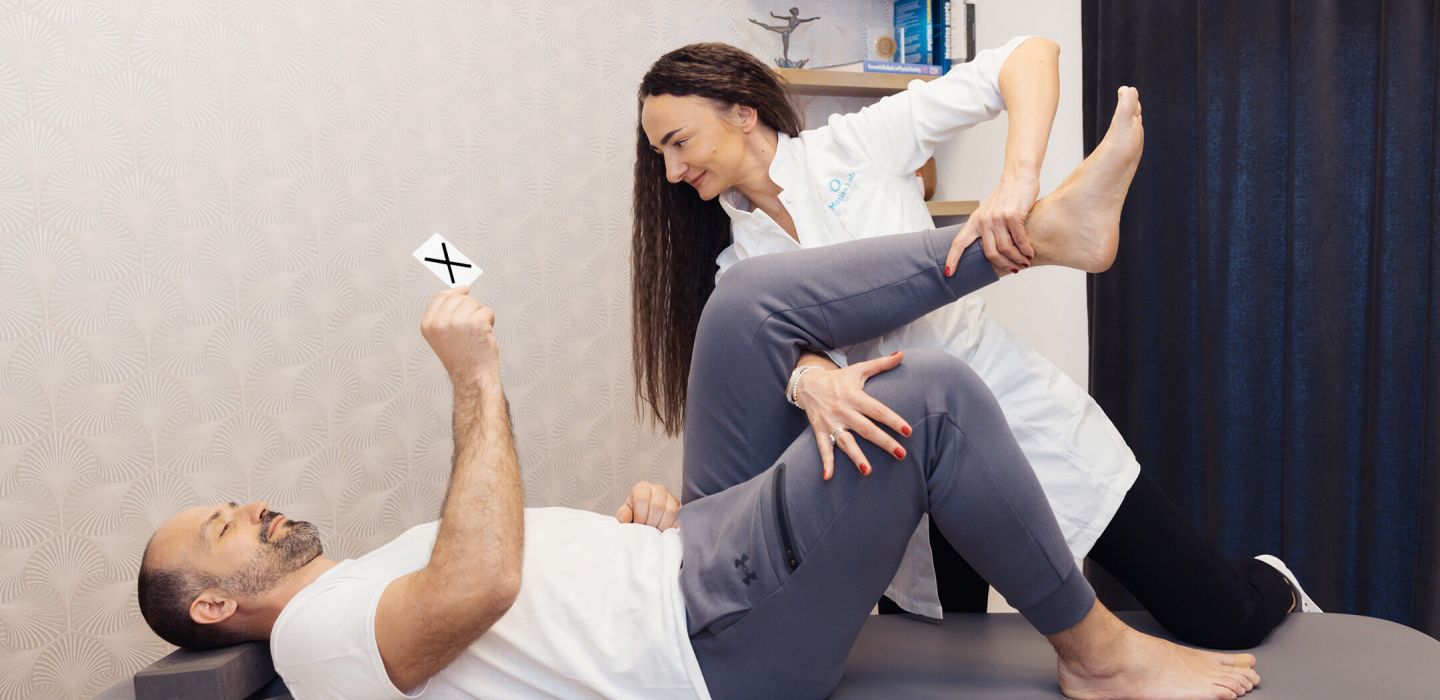
Most of the session involves painless manual testing and stimulation of the neuromuscular system. During testing, cards with “X” and “II” lines are used to emphasize or reduce your muscle reflex responses.

After identifying the issue, the therapist uses precise manual touch — by pressing, tapping, or otherwise stimulating specific body structures—to send signals via peripheral receptors to the central nervous system. This instructs muscles to relax or activate reflexes for smooth function.

Clients typically feel immediate improvements such as reduced pain or increased mobility. The non-invasive nature makes the therapy very comfortable and safe.


Pain Is More Than a Symptom

Discover what lies beneath

 
Discover more


FROM PAIN TO PERFORMANCE

Questions & Answers

Proprioceptive - Deep Tendon Reflex

01How do I know if P-DTR therapy is right for me?


If you feel pain or discomfort in a certain part of your body for a longer period of time, P-DTR therapy is ideal for you because it will, unlike most therapies, successfully determine the exact cause of that pain. By identifying and removing the real cause of pain, the symptoms will disappear.

 
Proprioceptive - Deep Tendon Reflex

02How should I prepare for P-DTR therapy?


Since in P-DTR therapy we analyze your dynamic and static posture, it is advisable to come to the appointment in comfortable clothing that is easy to take off and put on, or clothing that provides you with sufficient freedom of movement.

Additionally, it is advisable to avoid caffeine and alcohol immediately before therapy, as well as large amounts of sugar. Generally speaking, it is good to avoid all types of stimulants for your nervous system so that testing and therapy have the best possible effect.

Given that P-DTR therapy involves modulating CNS (central nervous system) responses, you want to provide your body with the best possible conditions for working on it.

 
Proprioceptive - Deep Tendon Reflex

03How many sessions are needed for visible results?


The number of therapy sessions certainly depends on the complexity of the pain or problem we are working with. Sometimes only 1-2 therapies are needed to feel significant relief, while sometimes a series of multiple therapies is required to achieve the same result, in situations when pain is caused by a greater number of factors (for example, when your back hurts because the neurobiomechanics of the trunk muscles are disrupted, but also the biomechanics of the ankle).

 
Proprioceptive - Deep Tendon Reflex

04What side effects can I expect after therapy?


P-DTR therapy is a very gentle and safe method, but temporary reactions may occur while the body adapts to changes. You may experience fatigue, mild dizziness, or headache immediately after treatment. Also, pain in the treated area may temporarily intensify. This happens when the body processes new information and adapts to corrected functioning patterns.

These reactions are short-term and usually disappear within 24 to 48 hours. They are part of the natural adaptation process of the nervous system and often precede a feeling of relief and improvement. Drinking enough water, rest, and following the therapist's recommendations can help the body cope with changes more easily and speed up adaptation.

 
Proprioceptive - Deep Tendon Reflex

05Should I attend P-DTR therapy regularly?


The advantage of P-DTR therapy is that once we identify the cause of the pain, resolve it, and take the necessary steps for ongoing prevention, the pain will not return. However, in agreement with your therapist, it’s advisable to come in periodically for a follow-up appointment—especially if you’re very active and have been experiencing certain discomforts for a while.

For example, if you regularly run and have had knee pain for some time, and after finding and resolving the cause you decide to run a half marathon, it’s recommended to schedule a follow-up visit—especially if you feel any discomfort during or after the race. We encourage this prevention model with all clients to avoid further development of dysfunctional compensations and pain.

 
Proprioceptive - Deep Tendon Reflex

06What are the “X” and “II” lines used in therapy?


We use the X and II (lines) to examine the reflex response of a specific muscle or movement. In P-DTR therapy, since we test the gamma motor neuron (muscle reflex) rather than the alpha motor neuron (muscle strength), we use X and II to facilitate response of the reflex itself.

For example, if the muscle reflex remains strong even when looking at the II (lines), it is a “hypertonic” response—in other words, that muscle is overactive. On the other hand, if the muscle yields under pressure when looking at the X, it is a “hypotonic” response—that muscle is underactive.