
Women’s Health
Holistic Approach to Women’s Health
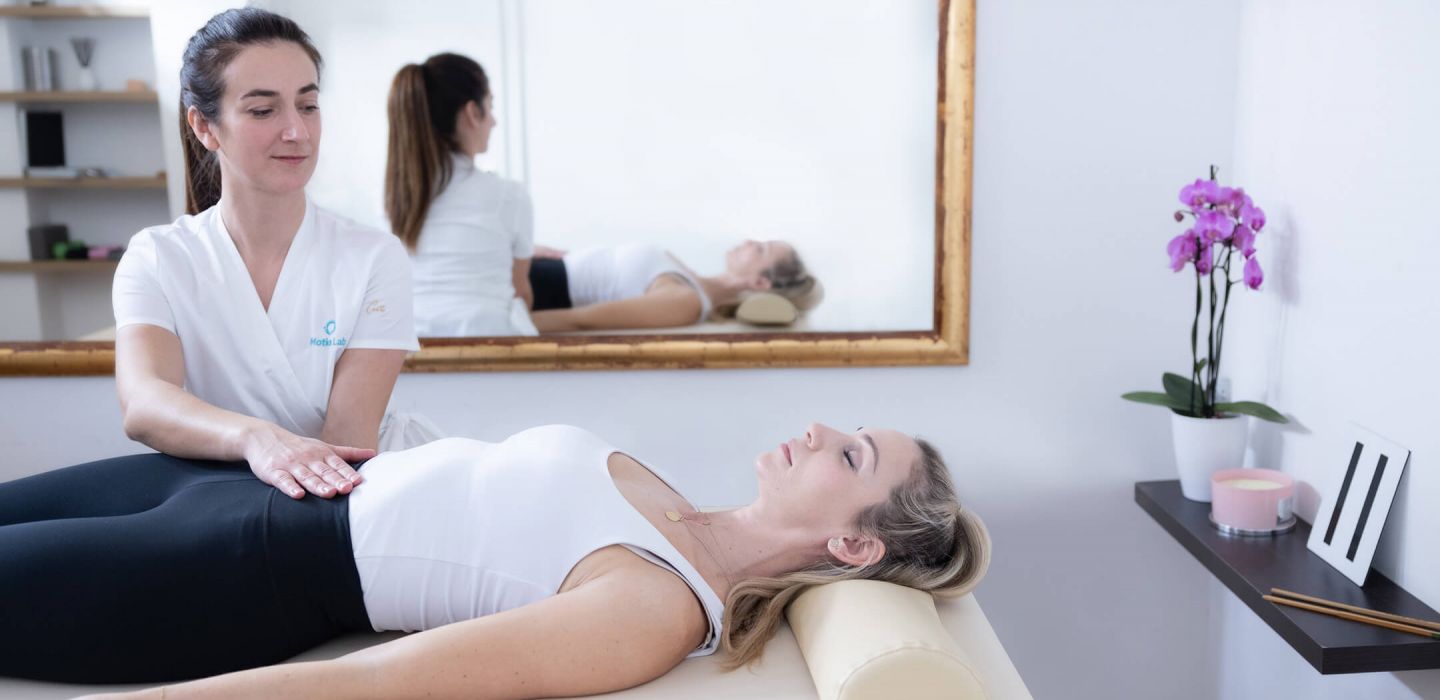
Skilled and Gentle
Support for Your Posture, Pelvic Floor, Postpartum Recovery, and Freedom of Movement
Our services are based on professional assessments and tailored therapies that specifically address women’s needs, ensuring optimal functionality and health of the female body. At Motion Lab, health is a priority, and our team is dedicated to providing lasting and effective solutions for issues and pain related to the pelvic floor, posture, C-section recovery, and diastasis.
01 Back, Neck, and Shoulder Pain
02 Incontinence
03 Swelling
04 Pelvic Instability
Prenatal.
Support and Preparation for Childbirth
Pregnancy is a time of change that brings many physical adjustments. Our experienced team will support you during this important phase of life, whether you are experiencing pregnancy-related pain or want to stay active and prepare your body for childbirth. Specialized prenatal programs are designed to relieve discomfort, help you feel good in your body, and prepare you for a natural and as comfortable as possible birth.
01 C-section Recovery
02 Incontinence
03 Pelvic and Abdominal Pain
04 Diastasis
Postnatal.
Solutions for Recovery and Relief from Postpartum Discomfort
After childbirth, the body undergoes a recovery process, and many women experience discomfort or pain while returning to daily activities. Our postnatal programs focus on restoring the body, including rehabilitation after a C-section, posture correction, and addressing diastasis issues.
Every pain is real and has its cause. We know how to find it.
Discover how we use modern diagnostics to identify the true source of your pain.

„Every woman’s health is unique—from pregnancy and motherhood to the specific challenges of later years. Entrust us with your health, because we don’t view the body through its limitations, but through everything it can achieve when approached the right way.”
dr.sc. Ines Čavar, mag.cin
Do you recognize any of these symptoms?
Areas of women’s health we specifically focus on:

C-Section Recovery
A C-section is a method of childbirth that has a lasting impact on a woman’s body. Unfortunately, it is common for women not to pay enough attention to recovery, which can lead to various dysfunctions associated with pain in the back, pelvis, and abdomen, as well as irregular digestion, bloating, and other issues.
To address problems and pain related to a C-section, our rehabilitation uses gentle and painless techniques tailored to your current condition. We focus on treating the scar to prevent painful adhesions, optimizing posture, normalizing digestive function, and restoring proper trunk muscle activation. Additionally, gentle manual techniques release the abdominal fascia and soft tissues of the abdominal and pelvic regions. At the same time, we work on proper breathing and basic muscle activation to restore tone, mobility, and proper function of all trunk muscles.
Abdominal Diastasis
Diastasis is a condition where the abdominal muscles separate, most commonly after childbirth.
Our approach to addressing diastasis is based on innovative manual techniques and gentle, targeted exercises rooted in DNS principles.
We use manual techniques to remove the underlying causes that prevent normal reflex activity of the trunk muscles. Once we establish the postural prerequisites for creating intra-abdominal pressure and proper deep muscle activation, targeted exercises help strengthen these muscles and restore the function of the abdominal wall.
Pelvic Floor Issues: Incontinence, Pain, and Other Problems
The most common pelvic floor issues are associated with pain and incontinence. Although incontinence can affect women of all ages, it most often occurs after childbirth as a temporary condition caused by weakened pelvic muscles during pregnancy and delivery. In some cases, this condition can become long-term, causing significant discomfort in daily activities.
Our therapeutic approach involves modern neurological methods that gently and non-invasively desensitize the nervous system and restore normal tone to all pelvic muscles. Targeted kinesiotherapy based on DNS principles ensures that, through proper breathing and awareness of pelvic positioning and movement, you perform painless and functional exercises. Additionally, we help you safely strengthen your pelvic and pelvic floor muscles to permanently address the root causes of your problems.
Impaired Body Posture
The prenatal and postnatal periods represent a time of significant physiological and postural changes for a woman’s body. Postural deviations that occur during pregnancy—such as changes in pelvic position, elevated ribs and chest, and forward-shifted shoulders and head—need to be addressed with gentle manual techniques targeting specific soft tissues. This approach supports the body so that, combined with targeted kinesiotherapy, it can quickly and properly restore balance and correct posture.

Case study.
Incontinence in Young Women.
"I’m having trouble with bladder control. I thought this only affected older women? It can be really uncomfortable."
Read the case study and discover our process and results in real-world conditions.
A middle-aged client came to us with bladder issues that had been affecting her daily life for years. The feeling of incomplete bladder emptying and frequent difficulties with urinary control had become a part of her routine, significantly impacting her quality of life. She approached us seeking a solution that would bring relief and restore her sense of freedom.
After a thorough consultation and detailed anamnesis, we began a diagnostic process to identify the root cause of her symptoms. Results showed that the problem was linked to neurological hypersensitization of the bladder, which caused increased sensitivity and control difficulties. With this understanding, we created a therapy plan tailored to her specific needs.
We started treatment with a gentle P-DTR method, focusing on restoring the function of the pelvic floor muscles, which are crucial for urinary control. After restoring function, we used kinesiotherapy to activate and strengthen the muscles associated with the pelvic floor, improving overall strength. Following muscle activation, we continued with P-DTR therapy to calm the bladder via the parasympathetic nervous system, while also addressing negative neurological responses related to thoughts (psychological factors) that further increased sensitivity.
The results were extremely positive: after just four sessions, the client experienced significant improvement, and her bladder control became much more reliable. After many years, she was once again able to perform her daily activities without fear or discomfort.
*To protect the privacy and personal data of our patients, all case presentations on this page use initials instead of full names. This practice complies with applicable data protection legislation, including the General Data Protection Regulation (GDPR), ensuring confidentiality and anonymity of our patients.
From pain to performance
Questions and Answers
01Is it safe to exercise during pregnancy?
Absolutely, as long as the pregnancy is healthy and the exercises are properly adapted. Professionally guided movement improves circulation, reduces discomfort, and helps the body prepare more easily for childbirth. With proper intensity and load management, exercise benefits both the mother and the baby.
02Do I need special exercises after a C-section?
Yes, but a C-section also requires manual therapy. After a C-section, the body goes through a specific recovery process that should include rehabilitation focused on the incision, fascial restrictions, and postural changes. Combining manual therapy with targeted exercises can facilitate and accelerate recovery, reduce pain, and prevent long-term compensatory issues.
03Why do I feel pain in my back and pelvis after childbirth?
During pregnancy, there are significant changes in hormone levels, pelvic alignment, and core stability. After childbirth, the body gradually returns to balance, but without proper support, dysfunctional movement patterns can persist. With a thorough assessment and an individualized therapy plan focused on restoring core stability and function, combined with personalized exercises, these issues can be effectively addressed.
04Is it normal to leak urine when I sneeze or run after childbirth?
It’s not considered normal, but it is very common. Postpartum incontinence is a sign of weakened or poorly coordinated pelvic floor muscles. The good news is that with a proper assessment, a precise and individualized rehabilitation plan can be designed to fully restore pelvic floor function and eliminate the symptoms completely.
05Can diastasis close on its own?
Yes, it can, but due to previously impaired muscle function, sometimes the muscles are unable to regain the necessary tone to fully close the abdominal wall. That’s why our rehabilitation protocol for diastasis that hasn’t resolved on its own initially focuses on restoring muscle function through manual therapy. This therapy helps re-establish proper muscle function, enabling the development of the necessary tone through targeted exercises.

From pain to performance
Personalized rehabilitation plan
Personalized therapy that doesn’t just treat symptoms but addresses the root causes. Discover more and start your recovery.
Discover more
Workouts Tailored to Women’s Needs
Pre- and Postnatal Training
For all women who want to exercise with a focus on health and safety, we have created customized individual and group programs. Our programs help you stay fit and healthy in a comfortable and supportive environment. Experience guided workouts designed specifically for women’s needs and achieve transformational results that exceed expectations.