
How Does Resolving Nonspecific Pain Syndromes Really Look?
Read a case study and discover our process and results.
27. 10. 2025. 5 min
Pain rehabilitation
A 28-year-old male approached us with a problem that had seriously affected his quality of life—dorsomedial disc extrusion at the L5/S1 level. The pain first appeared during weighted squats, and soon all movements involving lower back extension became difficult. He could no longer run, swim, or perform any jump-related activities, and even basic daily tasks were challenging.
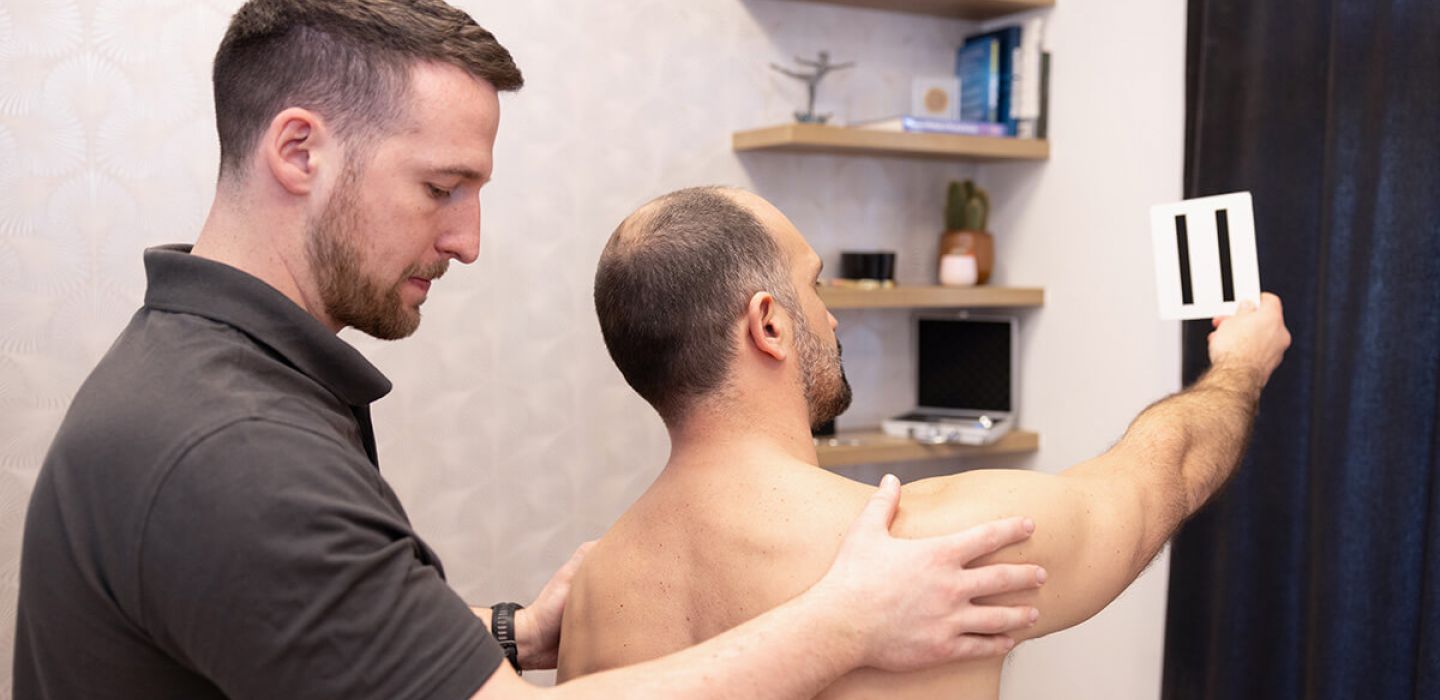
After conducting a thorough diagnostic evaluation, our first step was to provide pain relief using a combination of manual therapy and P-DTR therapy. Over time, as his pain decreased, the patient regained confidence in his movements, which motivated him to continue with a targeted kinesiotherapy program focused on correcting motor patterns, building endurance, and increasing strength. All exercises were carefully tailored to his condition and goals, enabling gradual and safe reintroduction of movements that had previously caused pain.
Upon completion of rehabilitation, the patient could perform all spinal movements without pain, and his return to sports and daily activities was unrestricted. We enrolled him in our preventive group program to ensure long-term results and help him avoid similar issues in the future.
Step-by-step process overview:
- Diagnostics: Detailed physical assessment and functional testing.
- Initial pain management: Manual therapy and neuromodulation (P-DTR), tailored to acute symptoms.
- Motivation and movement retraining: Patient education to boost confidence in movement, avoiding fear-avoidance patterns.
- Kinesiotherapy progression: Targeted motor exercises focusing on endurance, strength, and motor control, gradually increasing challenge as pain subsided.
- Safe return to activity: Stepwise reintroduction to previously problematic sports and everyday movements.
- Preventive follow-up: Inclusion in long-term group training and education for ongoing spine health.
Result:
After a systematic and multidisciplinary rehabilitation process, the client returned to all active movements and sports, experiencing life without pain and with restored confidence.
This approach demonstrates how even complex, nonspecific pain syndromes can be resolved with a structured, individualized process emphasizing diagnostics, acute care, progressive movement therapy, and prevention.
From pain to performance
How Does Resolving Nonspecific Pain Syndromes Really Look?
Neuroscience of Pain: Discover Why We Hurt Even When There’s No...
We’ve all felt that sharp twinge of pain growing up—falling off a bike, a bad landing, a twisted ankle, a pounding headache. The...
27. 10. 2025. 5 minutes of reading

Women’s Health: The Journey to Inner Balance
Women’s health is a journey where every step is important. It represents a complex system that changes throughout life—from...
27. 10. 2025. 5 minutes of reading
How Does Resolving Nonspecific Pain Syndromes Really Look?
A 28-year-old male approached us with a problem that had seriously affected his quality of life—dorsomedial disc extrusion at the...